
What is VOO?
VOO is an
operates
Beginners in stock investing may not be very familiar with it, but
Vanguard is one of the world’s largest asset management firms
It was also the first company
to individual investors.
Through index investing, people like you and me—
can benefit from the
is thanks to
thanks to the system Vanguard pioneered. Thank you! (/o^∀^o)/
Among index funds, VOO
managed with the goal of tracking the U.S. S&P 500.
VOO’s Total Return
This is probably what you’re most curious about, right?
It was posted on the Vanguard website
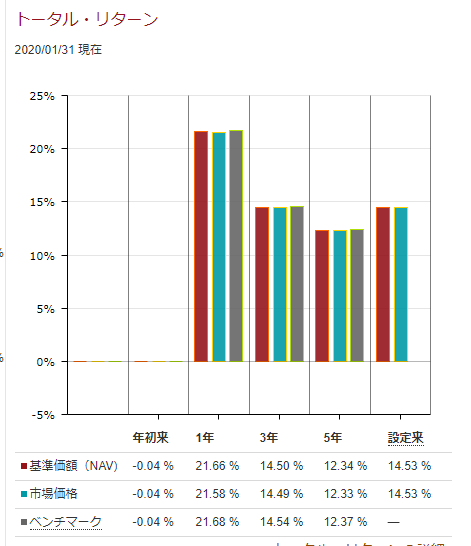
It’s up 21% over the past year
That’s an unbelievable number. (laughs)
It’s also surprising that it’s up 14% since its inception.
By the way, since the fund was launched in 2010,
this includes the stock market decline following the Lehman Shock
While it’s true that the S&P 500 has performed well since then,
I think it would be difficult for an individual
is difficult for an amateur.
Top 10 Constituent Stocks
The constituent stocks of the VOO are also listed on the Vanguard website
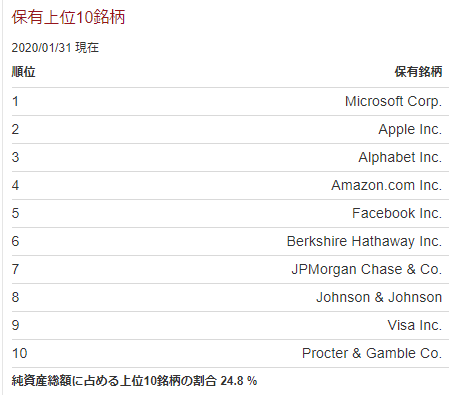
Microsoft ranks first
No. 2 is Apple
3rd place: Alphabet (Google)
4th is Amazon
5th is Facebook
Microsoft and GAFA
The list from 6th place onward is also filled with renowned multinational corporations
By buying just one VOO, you can
through a single VOO share
Plus, Vanguard automatically includes
to track the S&P 500
You don’t have to do a thing. lol
Just buy it
The fees are ridiculously low
With all these perks included
You’d think the fees would be high, given all this
However, the fee for VOO is
0.03% per year
How is that even possible?
The Vanguard website states the following:
I believe the founder’s attitude toward individual investors
is what made these fees so exceptionally low.
Incidentally, the founder was John Clifton Bogle

who, sadly, passed away in January 2019
I believe there are
all over the world
I thought this back then, and I’d like to offer my condolences here on the blog as well.
Dividend Yield
ETFs also pay dividends.
VOO pays dividends four times a year.
While the yield of 1.79% isn’t particularly high,
the strength of VOO, which tracks the S&P 500, is that it also offers the potential for capital gains.
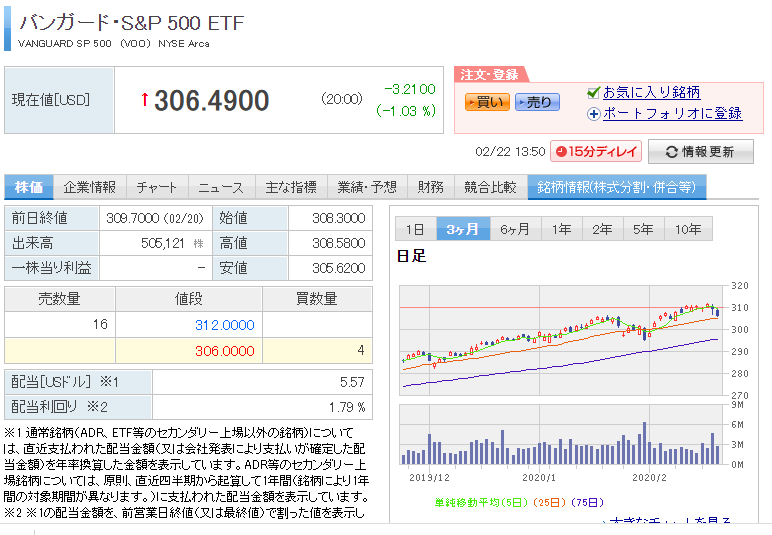
Incidentally, in 2019, the dividend per share was $5.57
Endorsed by the “Oracle of Omaha”
Even the “Oracle of Omaha,” Warren Buffett,
recommends investing in the S&P 500 in his letter to shareholders.
The goal of non-professional investors is not to select stocks that will perform well, and doing so in practice would be difficult for both the investor and their advisor. Rather, the important goal is to invest broadly in businesses that are likely to do well overall.
This goal can be achieved by investing in a low-cost index fund that tracks the S&P 500.
My advice to the trustee couldn’t be simpler: “Use 10% of your cash to buy short-term U.S. Treasury bonds, and use the remaining 90% to buy a very low-cost index fund that tracks the S&P 500.” (I recommend Vanguard’s index funds.)
(Source) Japanese translation by Monex Securities of an excerpt from Berkshire Hathaway’s 2013 “Letter to Shareholders”
I feel there’s no room for argument when the world’s greatest investor says this.
Even though they know they can’t beat professional martial artists or professional soccer players,
there are almost certainly no beginners or amateurs who would challenge them to a match
Even if they do challenge them, it’s likely out of “admiration”—a kind of “please let me try” attitude
However, when it comes to investing, a strange confidence—that one can surpass or outsmart the pros—
strange confidence that they can outperform or outsmart the pros
A select few might be able to do it, but
but for most people, beating the S&P 500 is difficult.
I personally think a strategy of mainly investing in ETFs like VOO through regular contributions, plus about a 10% “challenge” allocation,
is, in my personal opinion, the better approach.
I created this content with the idea of reaching those
are just starting to get interested in U.S. stocks and ETFs
Thank you for watching until the end♪


コメントを残す