Nmya~chi! Tuna (@miyakojimalife_) (*’▽’)
In this post, I’ll be introducing “Asaguya,” a restaurant on Miyakojima Island. While locals tend to steer clear of places that cater mainly to tourists—since they often charge tourist prices and serve smaller portions—the “Asaguya” I’m introducing today isA popular restaurant frequented by both tourists and locals!
The main reason for its popularity is, without a doubt, that the food is delicious, but for locals, there are other reasons as well, so I’ll share them here! I hope you enjoy reading this.
AWhat Is “Sagu-ya”? Introducing a Popular Diner on Miyakojima Island
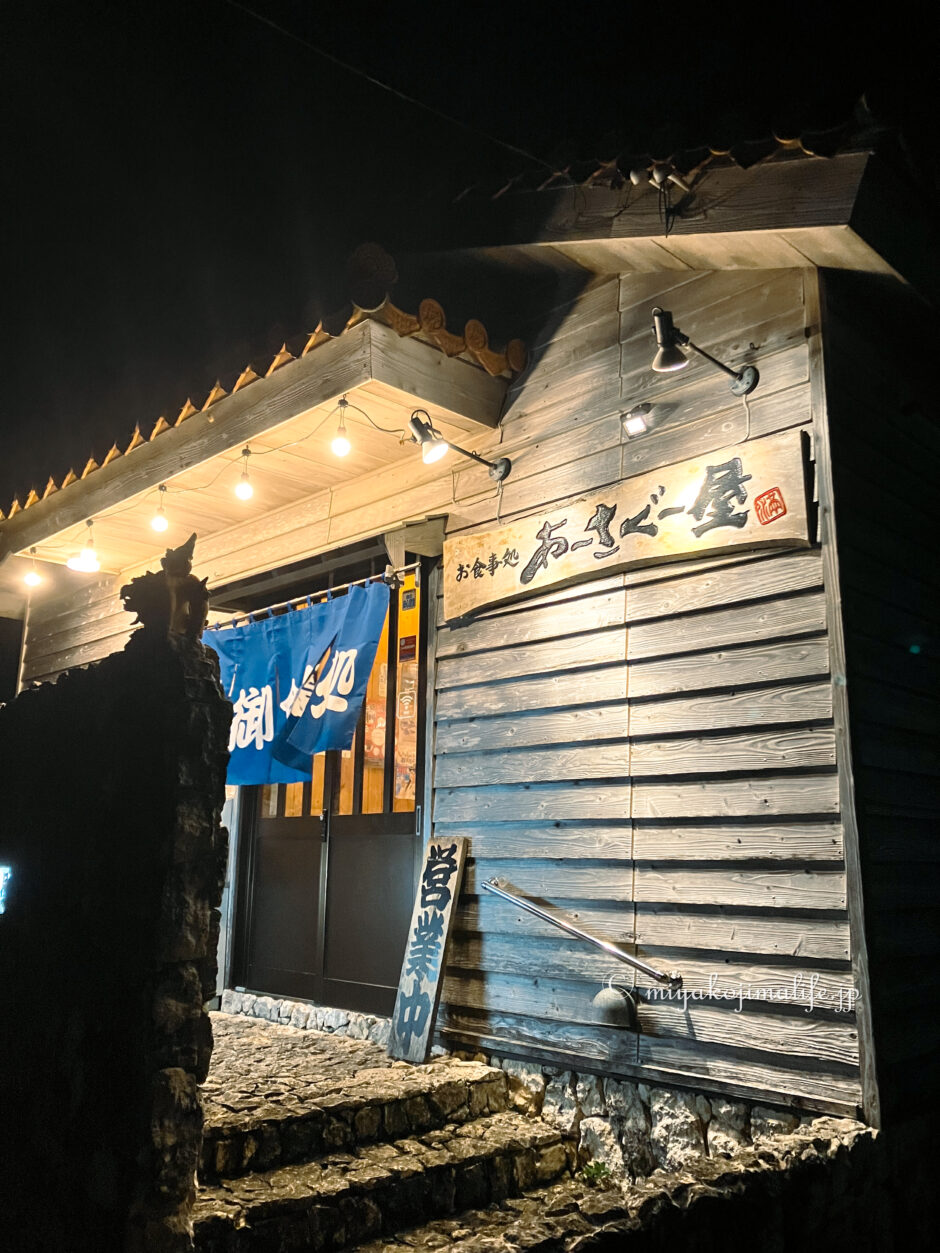
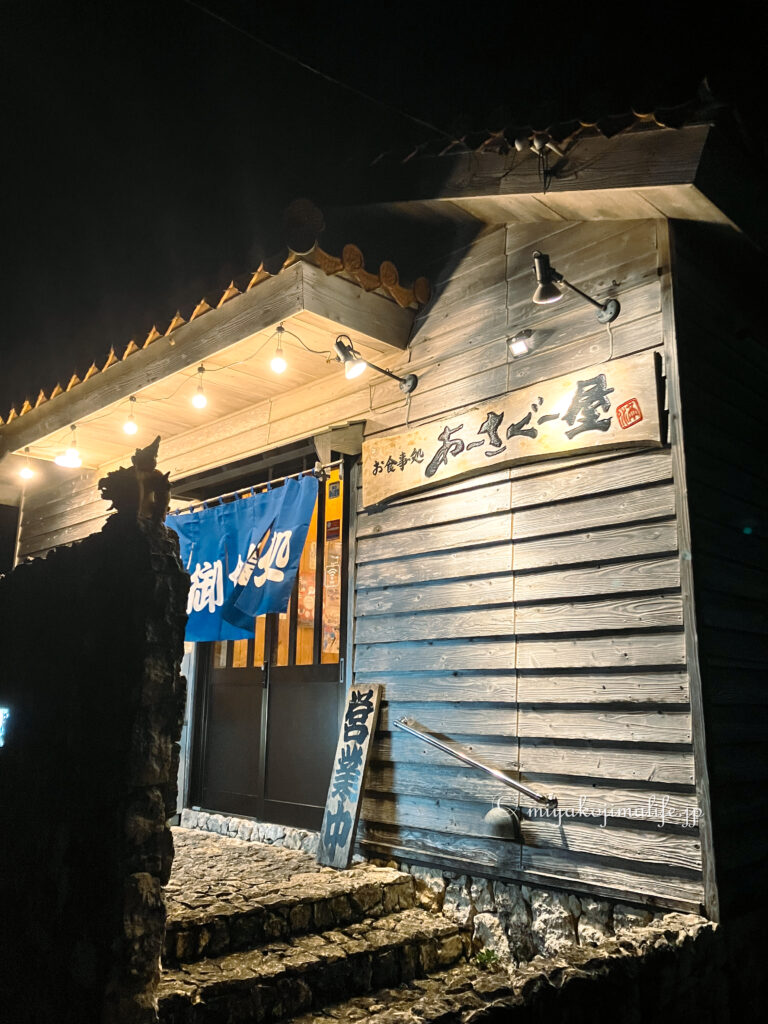
A-Sagu-ya is built in the style of a traditional Okinawan thatched-roof house. The stone screen at the entrance, called a “hinpun,” is a nice touch that really captures the essence of Okinawa.
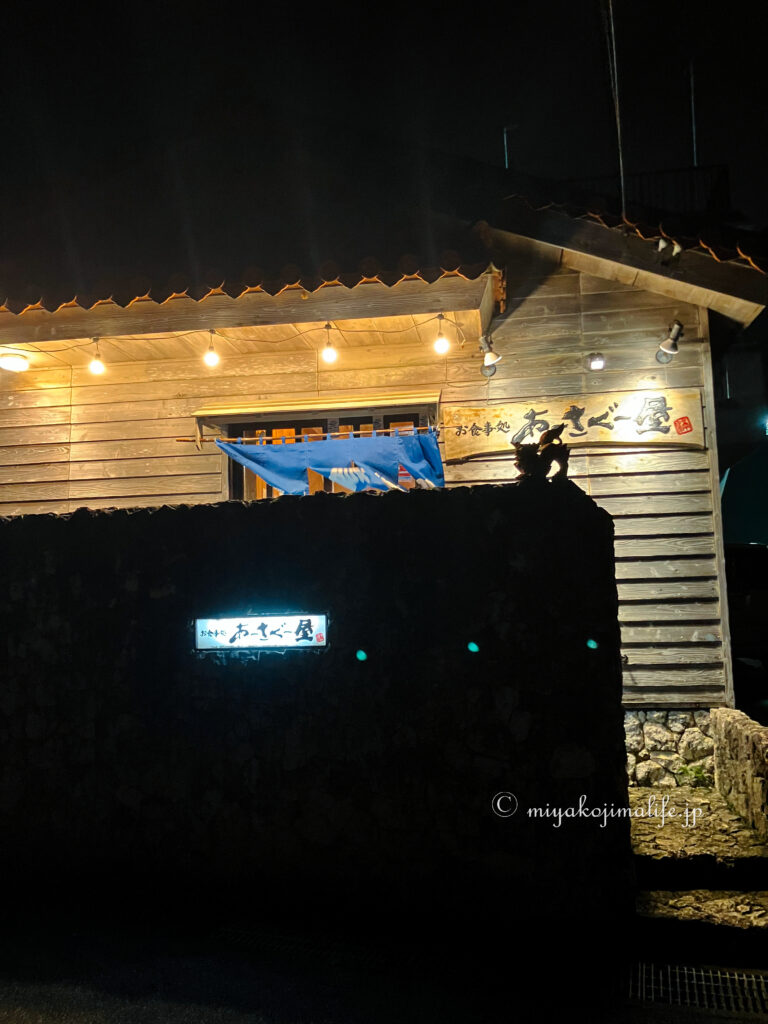
Himpun has stairs on both sides, so you can go up from either the left or the right. Although there is no ramp, the steps are relatively low, making it easy to climb.
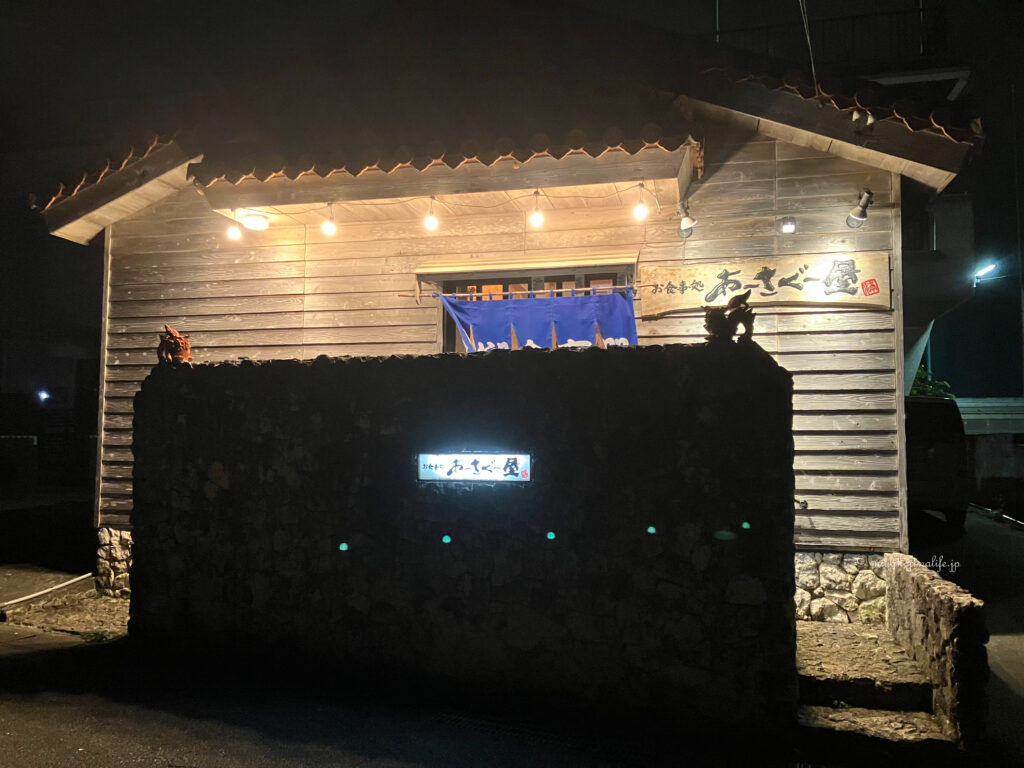
This is what the entrance looks like just past the Hinpun.
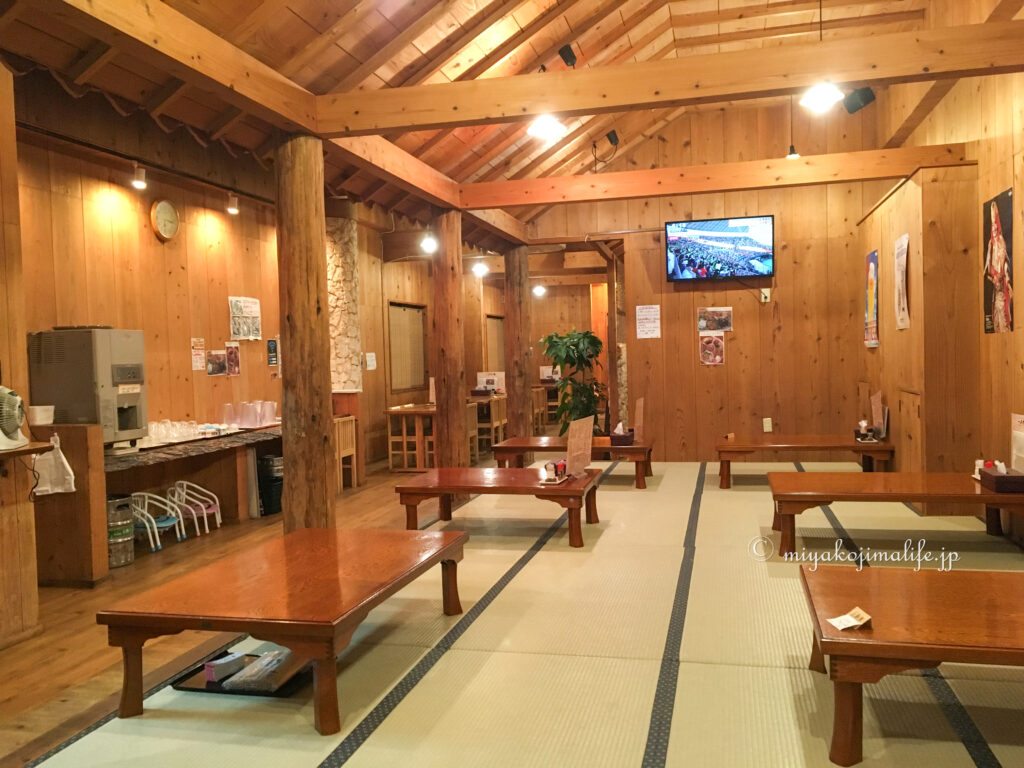
The interior is also a relaxing space
The interior is designed to evoke the feel of a traditional Okinawan home. There are 74 seats! The spacious tatami room is perfect for families with small children; our family used to frequent it often when our kids were little. In addition to the tatami room, there are also table seats.
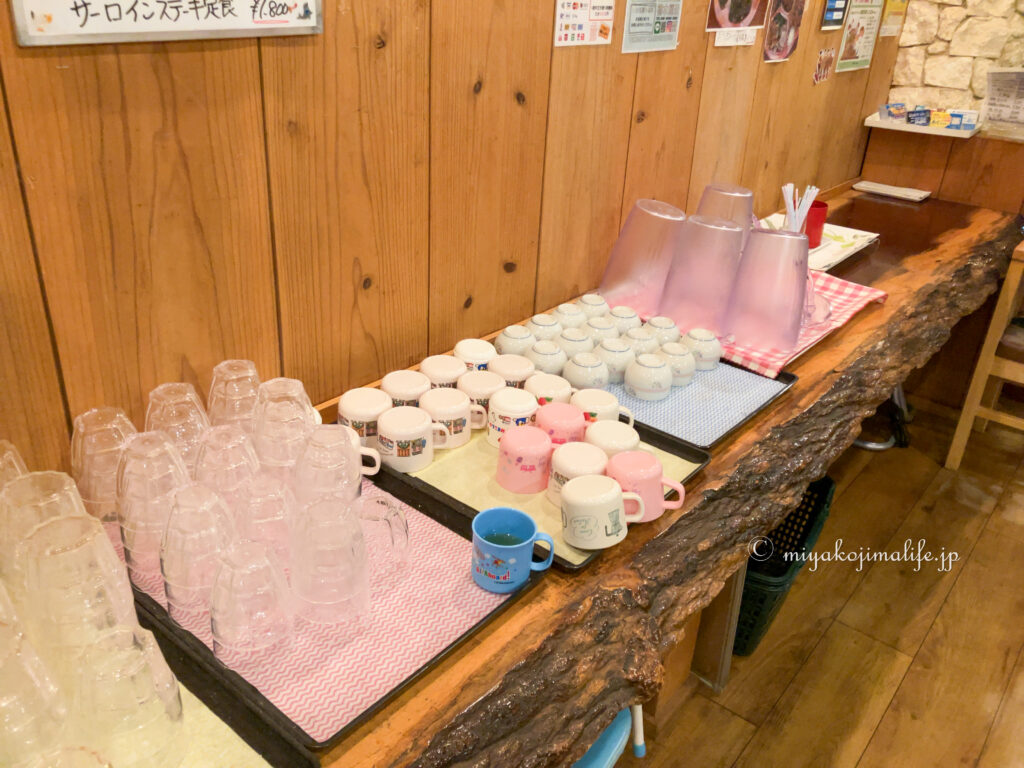
Water and tea are self-serve. Personally, I’m glad about this because I feel a bit self-conscious about calling a staff member over to ask for tea.
A popular restaurant serving home-style and regional cuisine from Miyakojima
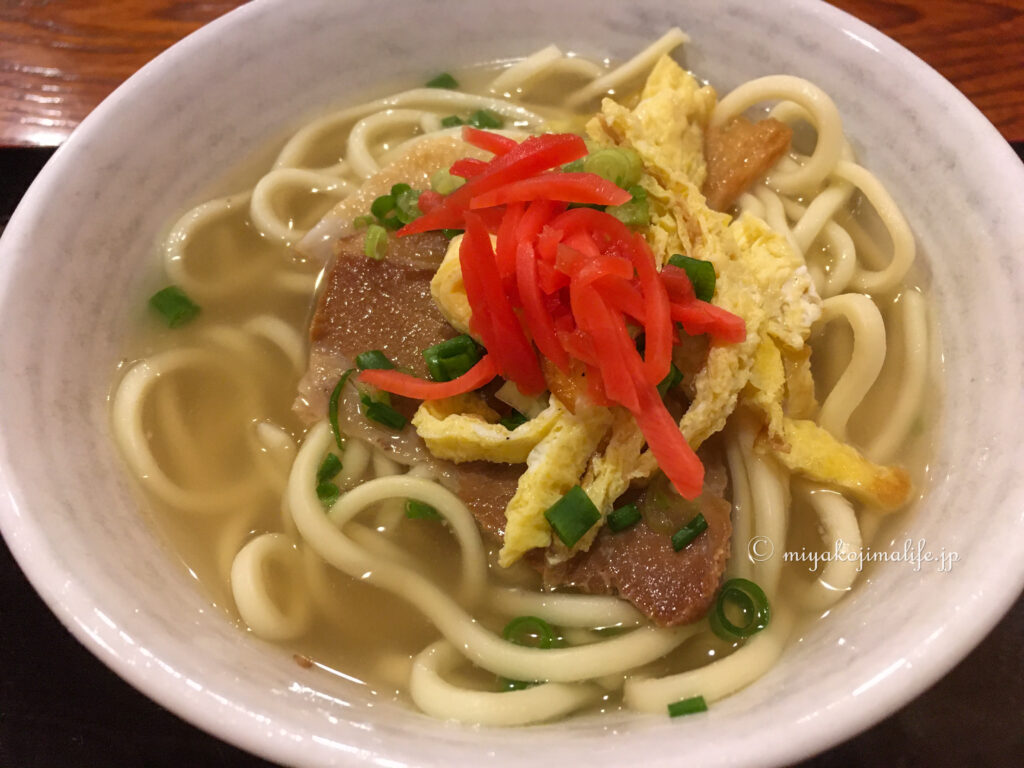
The best thing about Asagu-ya is that you can enjoy home-style and local dishes from the island. My kids always order the Miyako Soba (small)! It costs 600 yen. It used to be 450 yen, but inflation has reached Miyakojima too (T▽T). The broth is delicious, too.
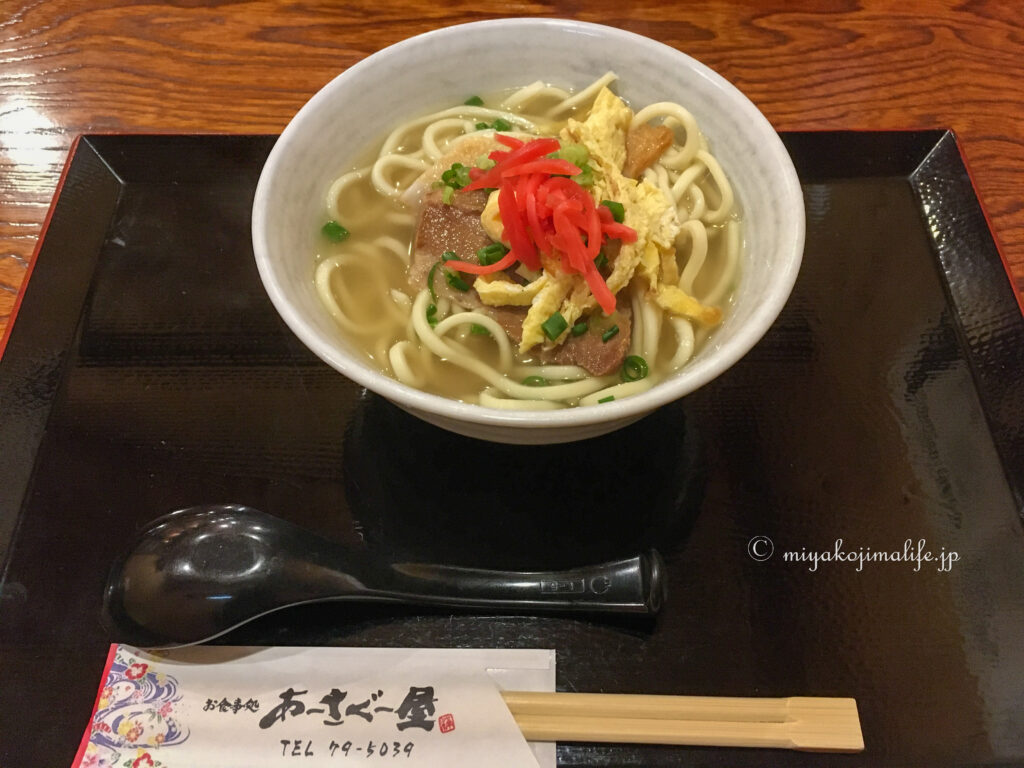
Here’s what it looks like up close. It’s delicious—it contains pork belly, kamaboko, and thinly sliced tamagoyaki! They’ll leave out the pickled red ginger and green onions if you prefer. They’re included by default.
My husband and I often order Miyako soba. This bowl costs 800 yen and comes with two slices of pork belly and two pieces of kamaboko.
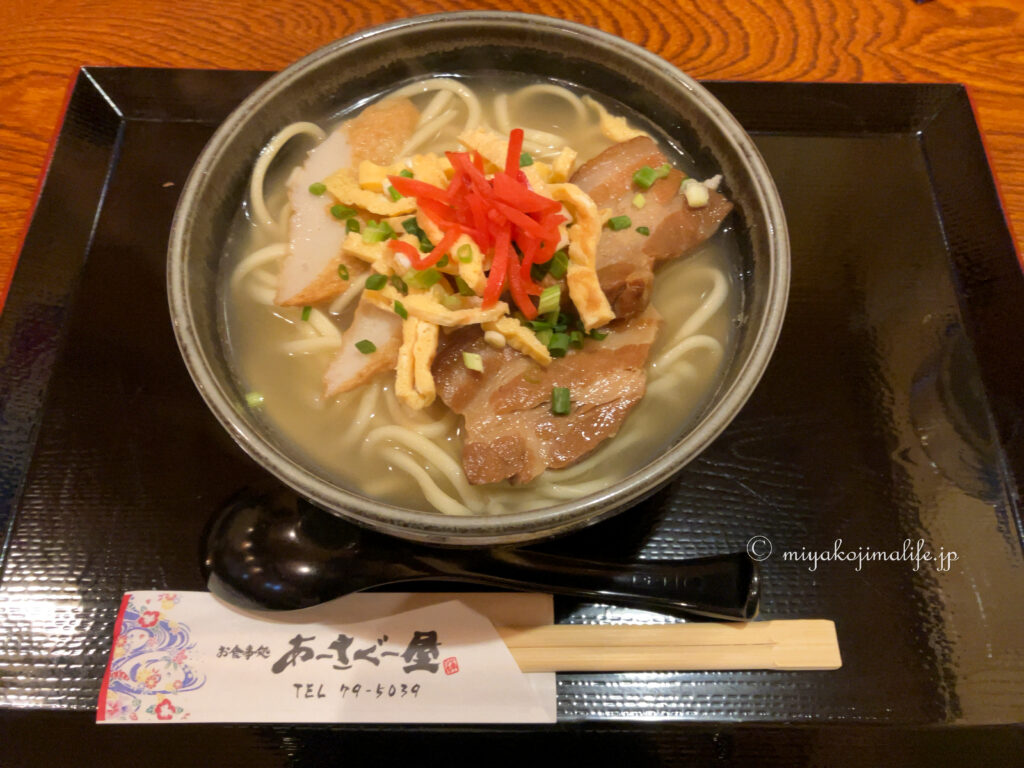
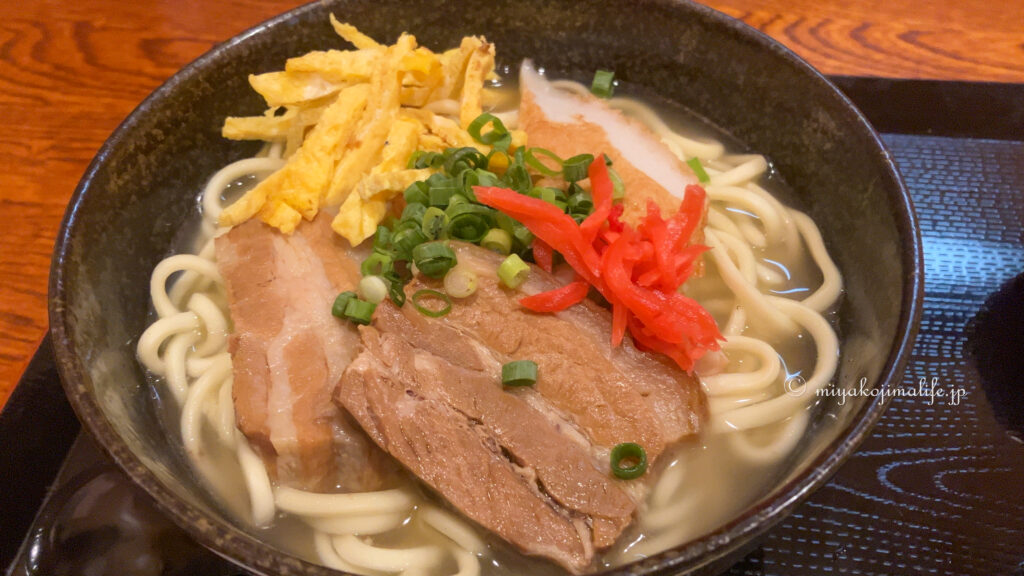
The portion is quite filling. Here’s what it looks like up close. The pork belly is well-seasoned and delicious. In the old days, both the pork belly and fish cake were hidden beneath the noodles in Miyako soba. Recently, many restaurants have adopted the style of placing them on top, similar to Okinawa soba.
Other dishes include goya champuru, tofu champuru, and squid and tuna caught in the waters off Miyakojima.
The set meals are hearty and satisfying.
There are definitely times when some people in your family or group want to try something other than the island’s home-style cuisine. That’s where Asaguya really shines—it’s got you covered. The fried shrimp set meal (1,200 yen) is a popular choice when you’re thinking, “I’m not really in the mood for soba today.”
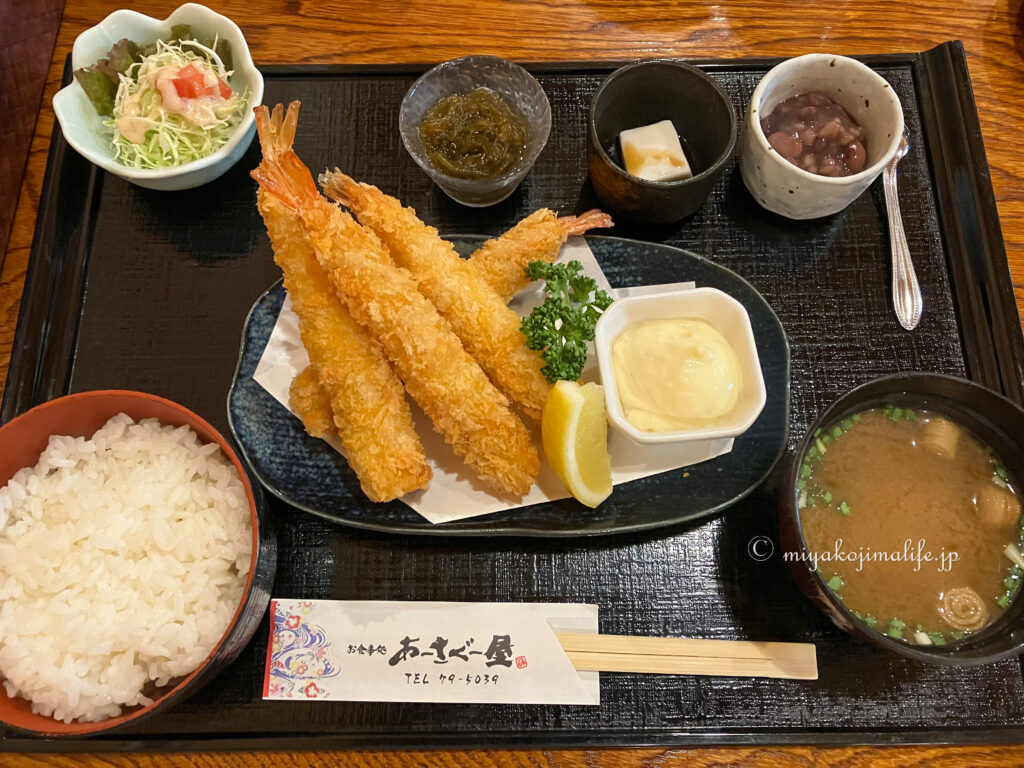
The batter is crispy and delicious. Unlike the thin, meager shrimp you often find at cheap chain restaurants—where the batter is used to make the shrimp look bigger—the shrimp here is plump and meaty.
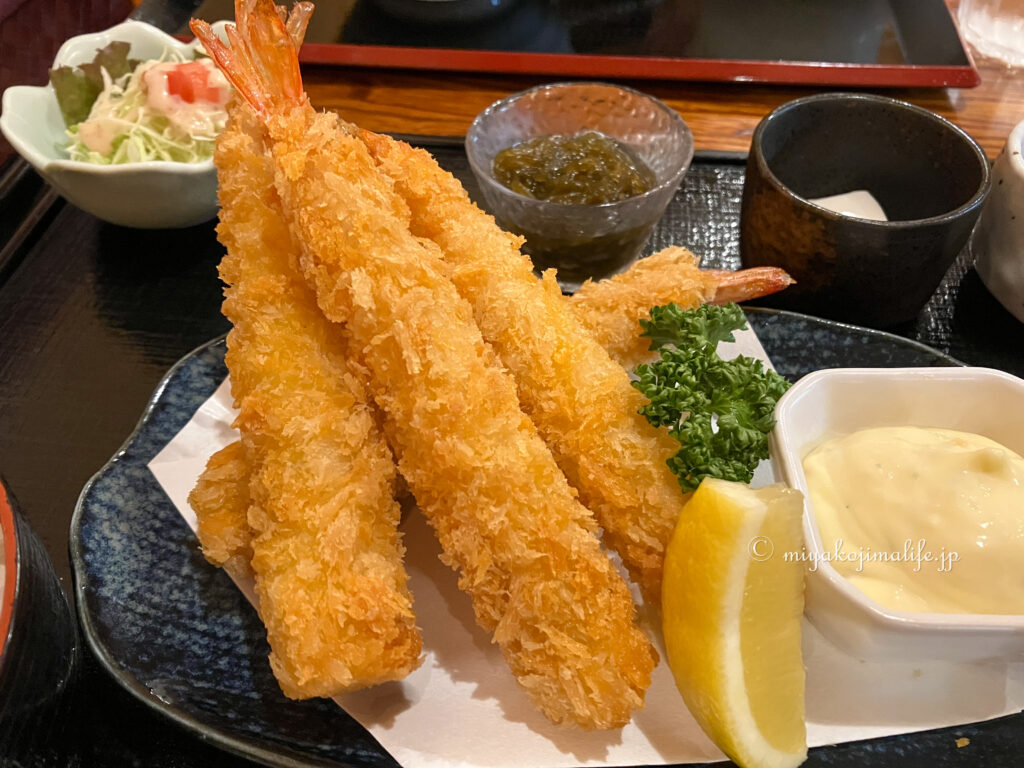
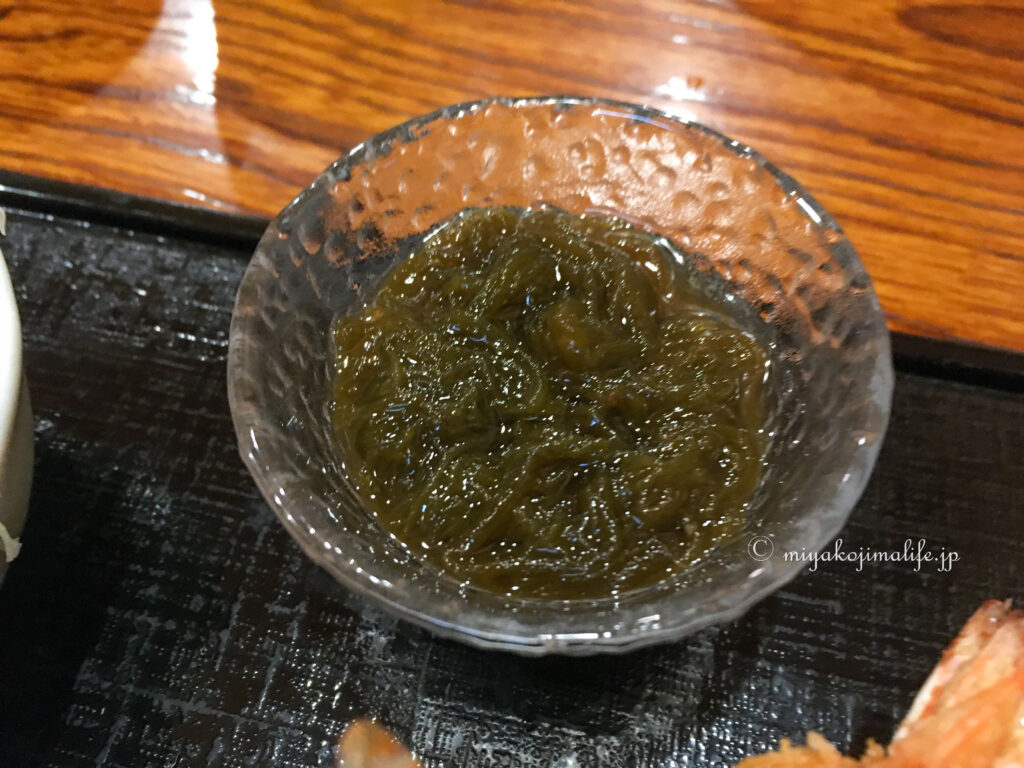
Mozuku, jima-mi tofu, and zenzai—served in small bowls—are traditional Okinawan dishes. Mozuku is said to help control blood sugar levels and lower cholesterol.
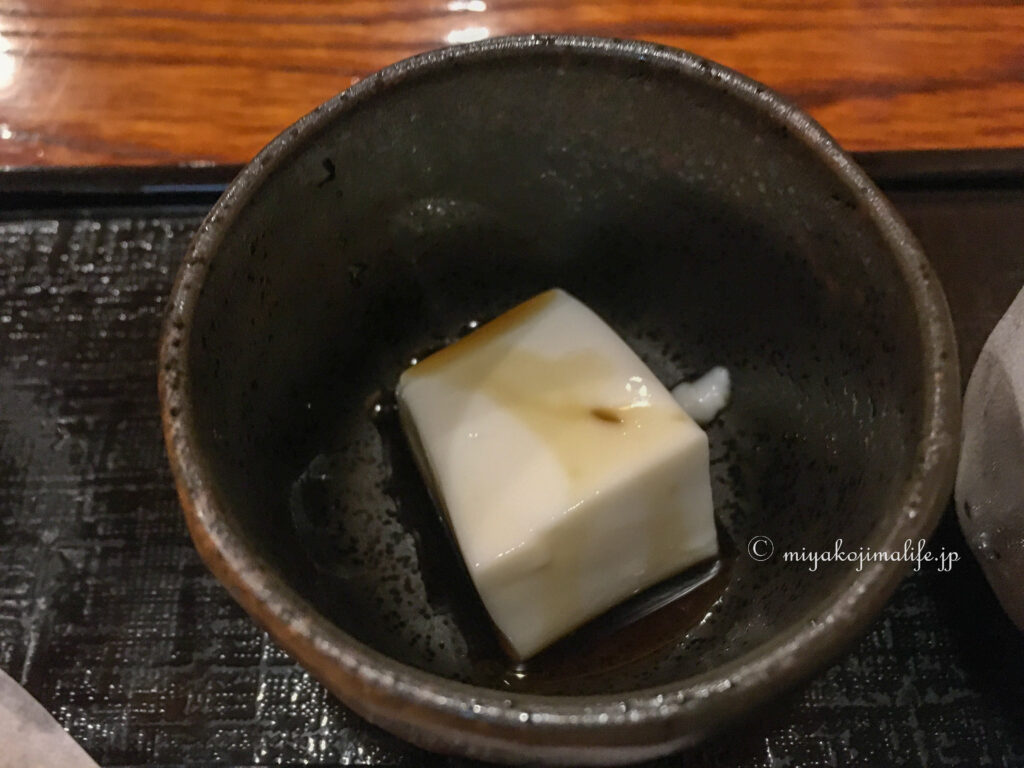
Jīmami tofu has a peanutty flavor. With a chewy texture similar to pudding, it was served as a court dish during the Ryukyu Kingdom era.
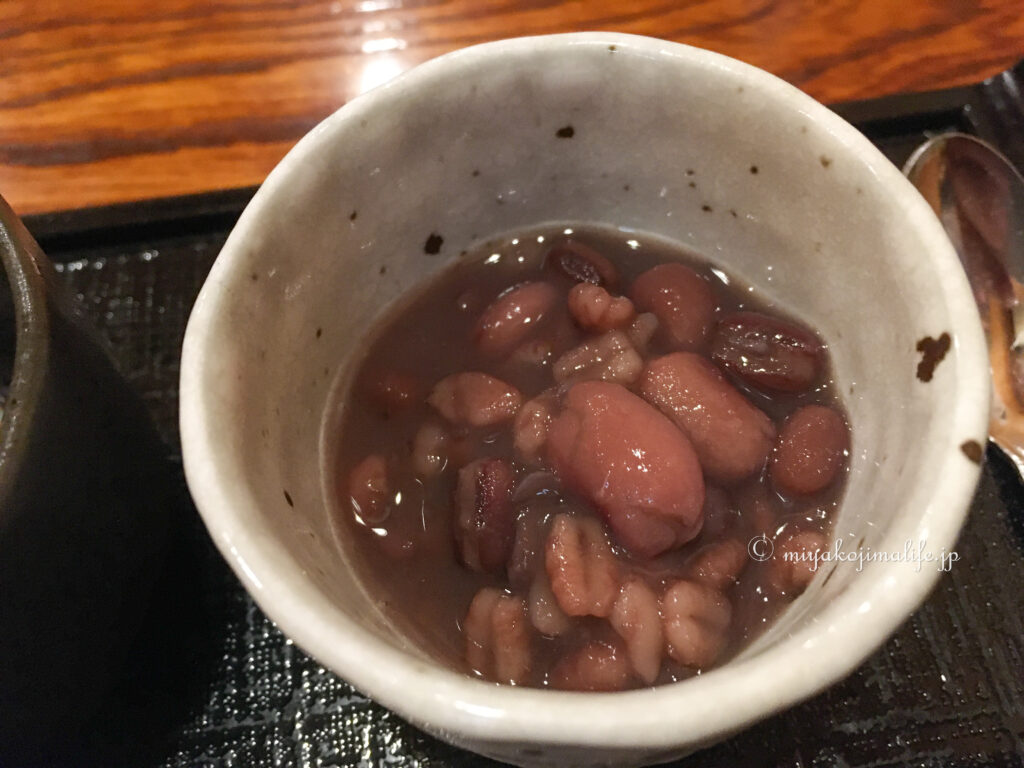
On the main island of Okinawa, when people talk about zenzai, they generally mean a dish of kintoki beans simmered in brown sugar or regular sugar and topped with shaved ice. However, the zenzai at A-Sagu-ya is the type that has been eaten on Miyakojima for a long time. It consists of adzuki beans and pearled barley simmered in brown sugar and then chilled. To be honest, I’m not a big fan…
A—Sagu-ya’s Recommended Menu
As I’ve mentioned, Asaguya offers everything from Miyako soba to local specialties and set meals! Here are my personal recommendations from their menu.
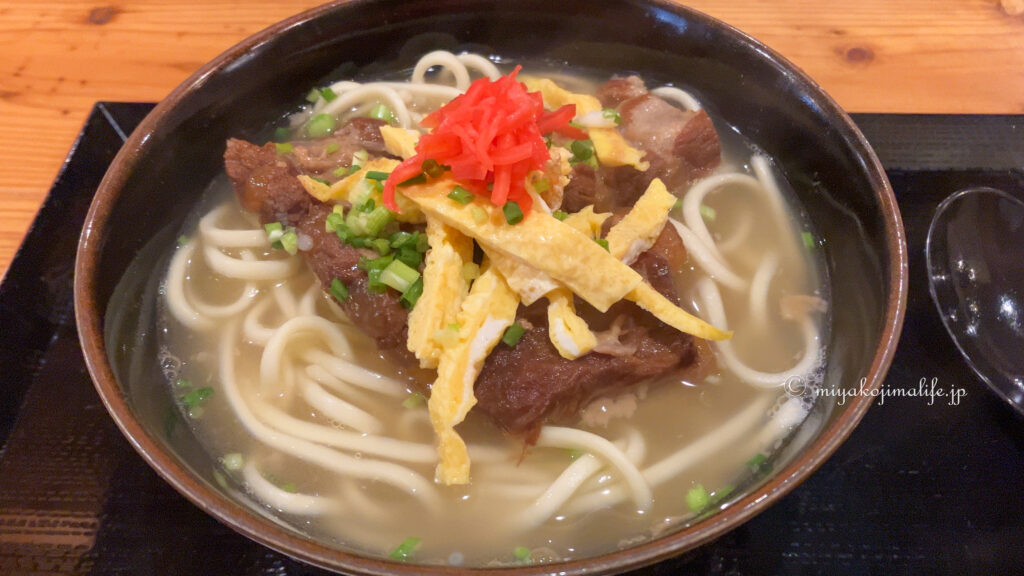
Soft-Bone Soki Soba: A masterpiece where even the cartilage melts in your mouth
First and foremost, you have to try Miyako soba! Among the options, I highly recommend the “Nankotsu Soki Soba,” which features pork ribs with cartilage.
The crunchy texture of the cartilage is delicious, and above all, the meat is so tender it practically melts in your mouth. The flavor is thoroughly infused into the meat, so you should definitely give it a try. The price is 850 yen.
Sashimi and Seafood Salad: Fresh from Miyakojima
Second on the list is seafood. The sashimi and seafood salads made with tuna, squid, and other seafood caught on Miyakojima are incredibly fresh and highly recommended. Aasaguuya also carries awamori produced on Miyakojima, which pairs perfectly with the sashimi. The price is 750 yen.
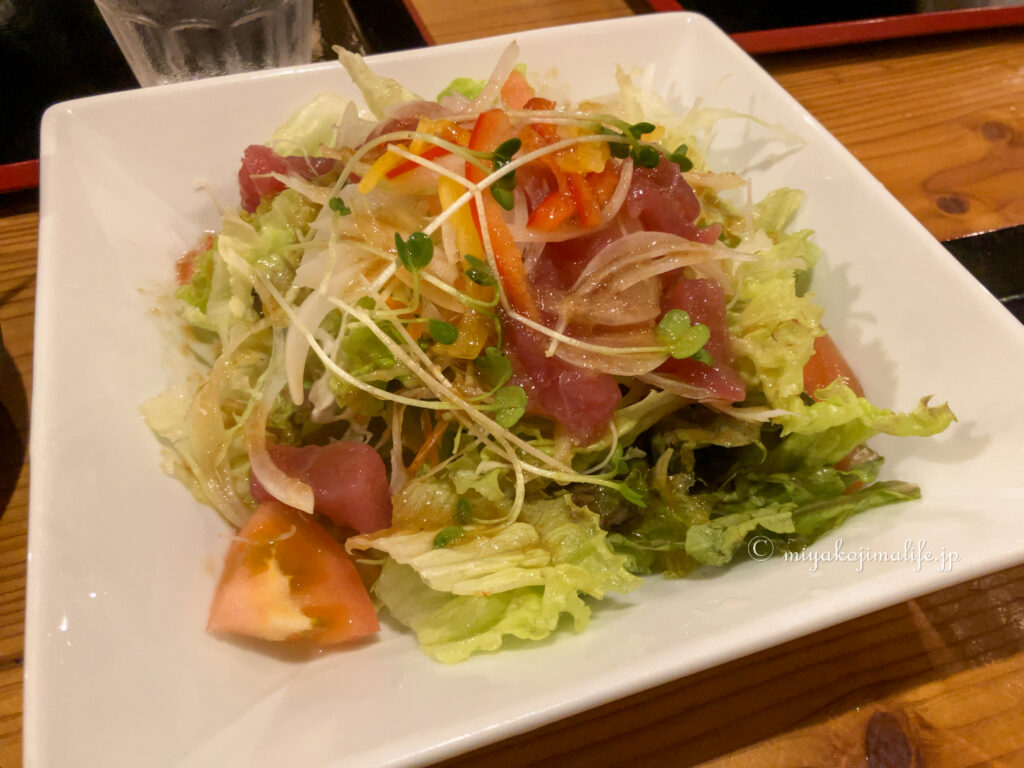
Sashimi is especially popular and often sells out. Fish caught in the waters around Miyakojima, such as tuna and squid, are delicious because they aren’t frozen.
Miyako Beef Sirloin Steak: The Rich Flavor of Exquisitely Tender Wagyu Beef
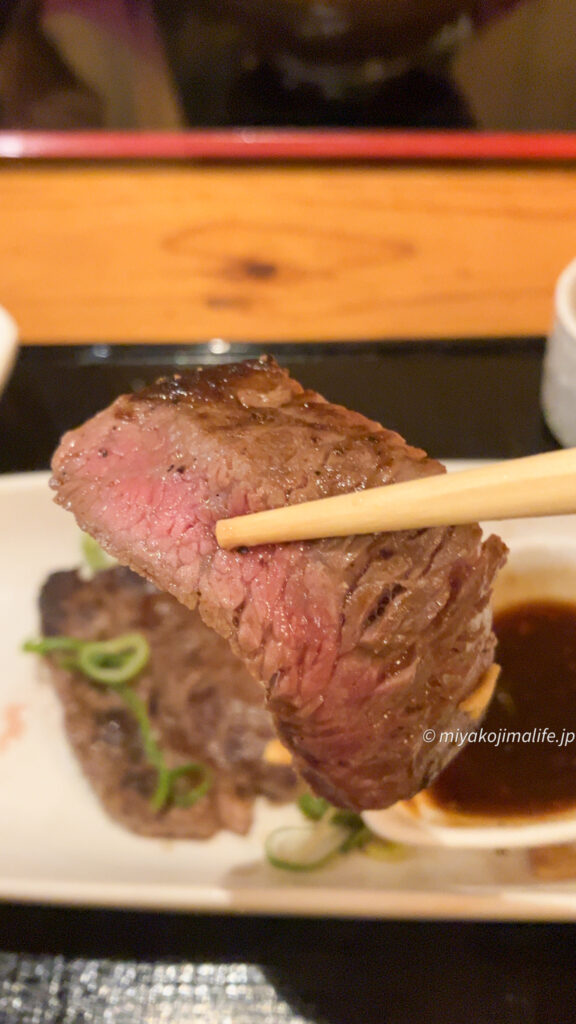
Third up is the sirloin steak! It’s so tender it practically melts in your mouth—it’s irresistible. The price is 3,000 yen.
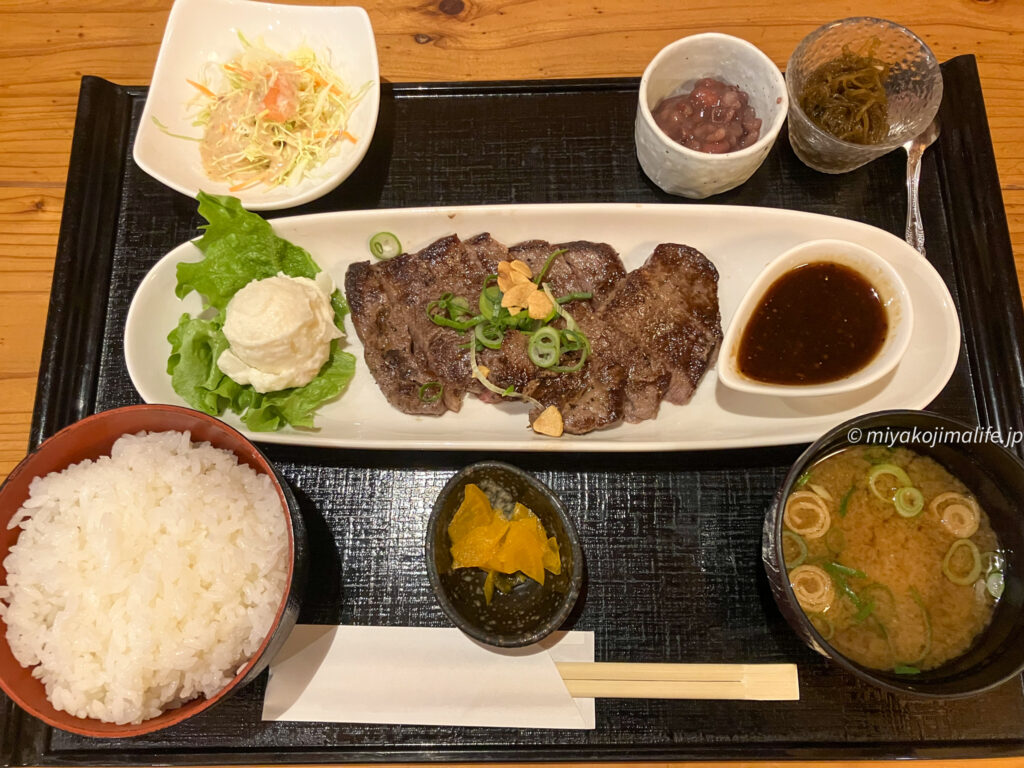
Here’s what it looks like up close. The meat is thick and very satisfying to eat.
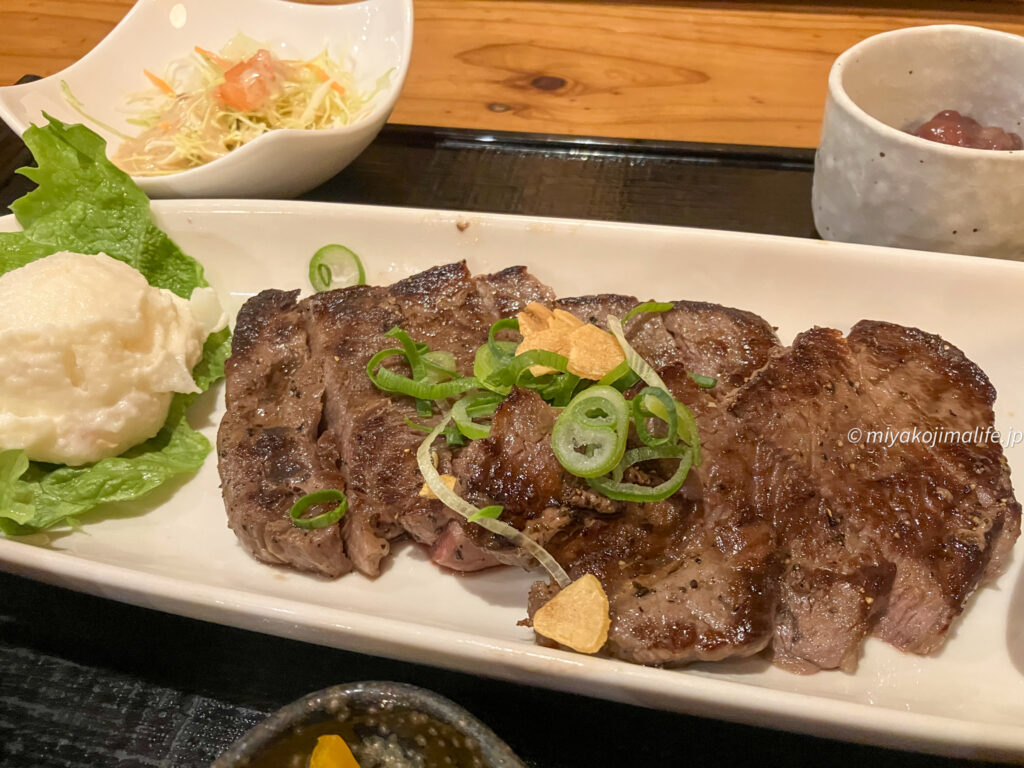
It’s cooked a little on the rare side. The meat is tender and sweet, making it go great with rice.
Okinawa Prefecture ships a large number of calves, which often become the basis for famous beef brands nationwide. While there are many steak houses on Miyakojima, Asaguya offers an excellent balance of taste, quality, and price!
If you’d like to learn more about Miyako beef, please check out our previous articles below ↓
 The Island’s Auction Market! I Visited the Miyako Livestock Market
Curly Fries: You know, the ones from A&W!
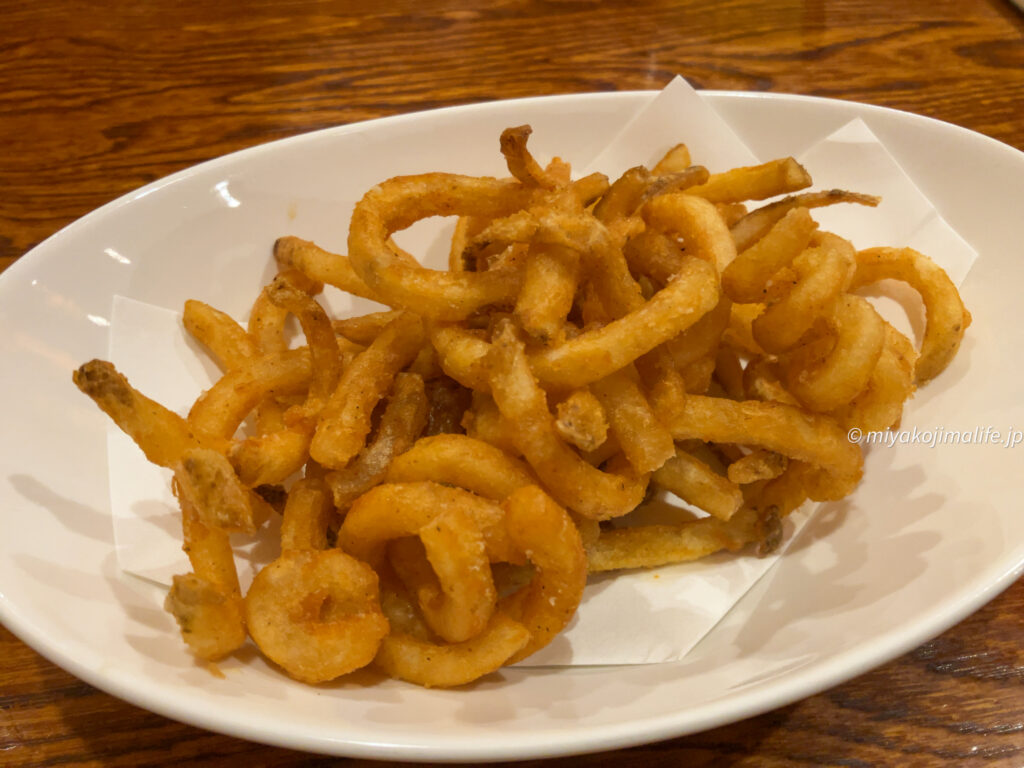
Finally, here’s a little snack. These fries are popular for their unique shape, texture, and flavor—quite different from the fries at McDonald’s or Mos Burger. They’re also a hit at A&W, a hamburger chain commonly found in Okinawa. My kids love them, too.
AAccess and Business Hours
Here’s how to get to Asaguya and its business hours. Asaguya is located near the downtown area of Miyakojima, in the former city of Hirara. Since Sunayama Beach is nearby, it’s a great place to visit before or after sightseeing.
Conveniently located just an 11-minute drive from Miyako Airport
We’ll show you where Asaguya is located on the map. It’s close to Miyako Airport and easy to get to.
Hours: Lunch 11:00 a.m.–2:00 p.m., Dinner 5:30 p.m.–9:00 p.m.
Please note that there is a midday break during business hours. Most restaurants and eateries on Miyakojima Island have a midday break.
Although there are last-order times, we recommend checking in advance to see if the establishment is open.
LocationReasons Why Even Locals Love It
Personally, I think the sight of middle-aged men holding a “moai” meeting while tourists are around is something you rarely see at other shops. (A “moai” is a tradition where a group of friends meets regularly to pool their money, with one person taking the entire pot each month.) I’ll share my personal thoughts on why locals frequent this place so much that it’s even used for moai meetings.
A wide variety of dishes and great flavors
As I’ve mentioned before, dishes made with ingredients from Miyakojima—such as Miyako soba, sashimi, and steak—are absolutely delicious. It’s also great that there’s such a wide variety of menu items. Having lots of options means you’ll never get bored, right?
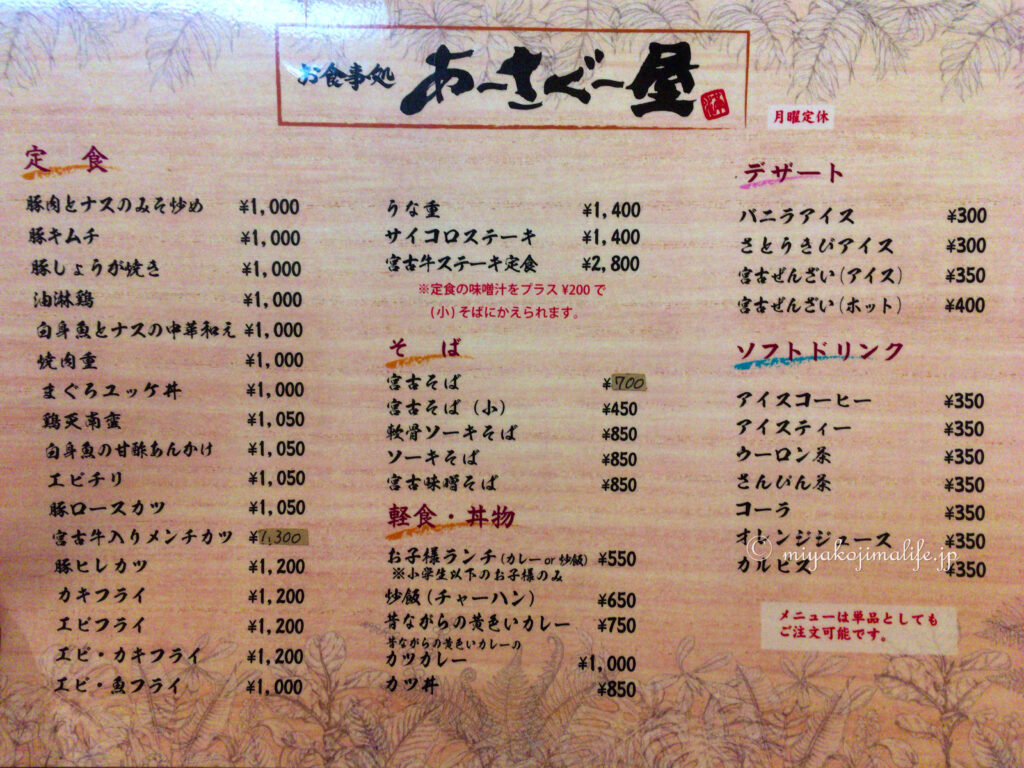
I also think the extensive selection of awamori and the price range are among the reasons for its popularity.
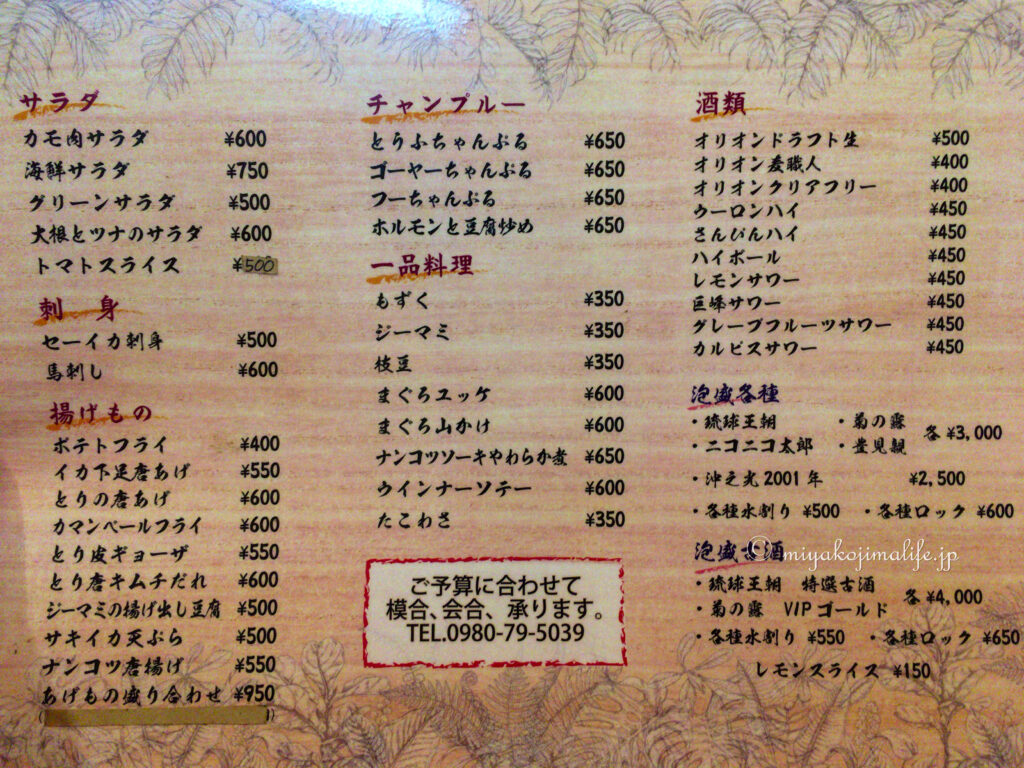
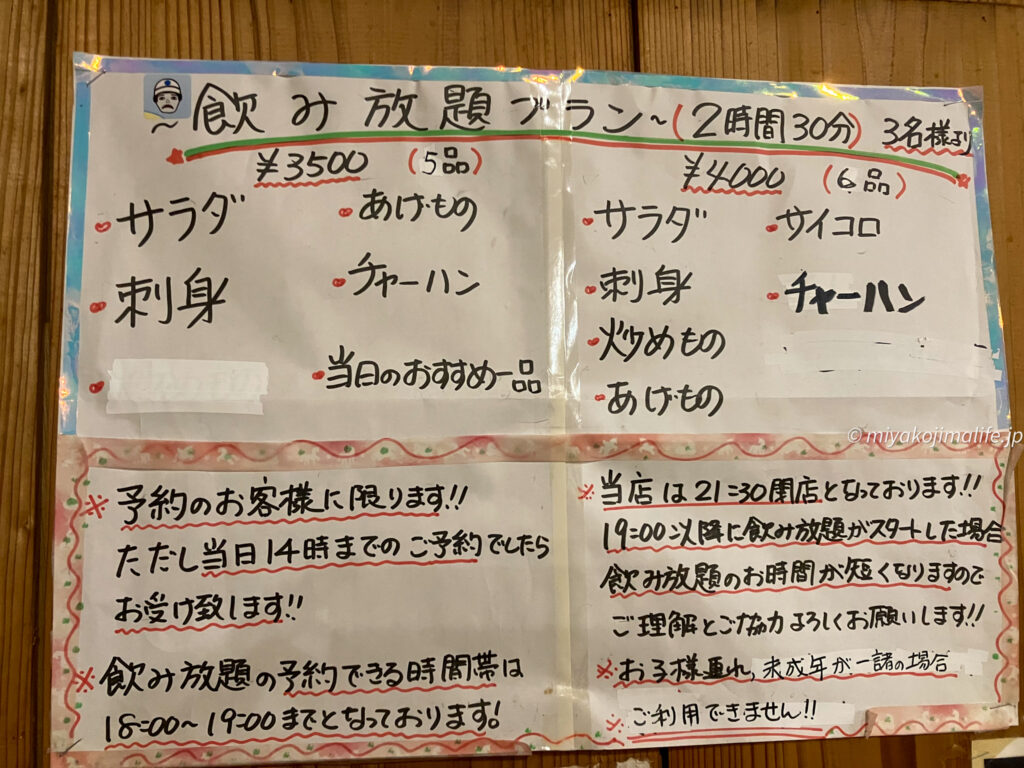
There are also all-you-can-drink plans available.
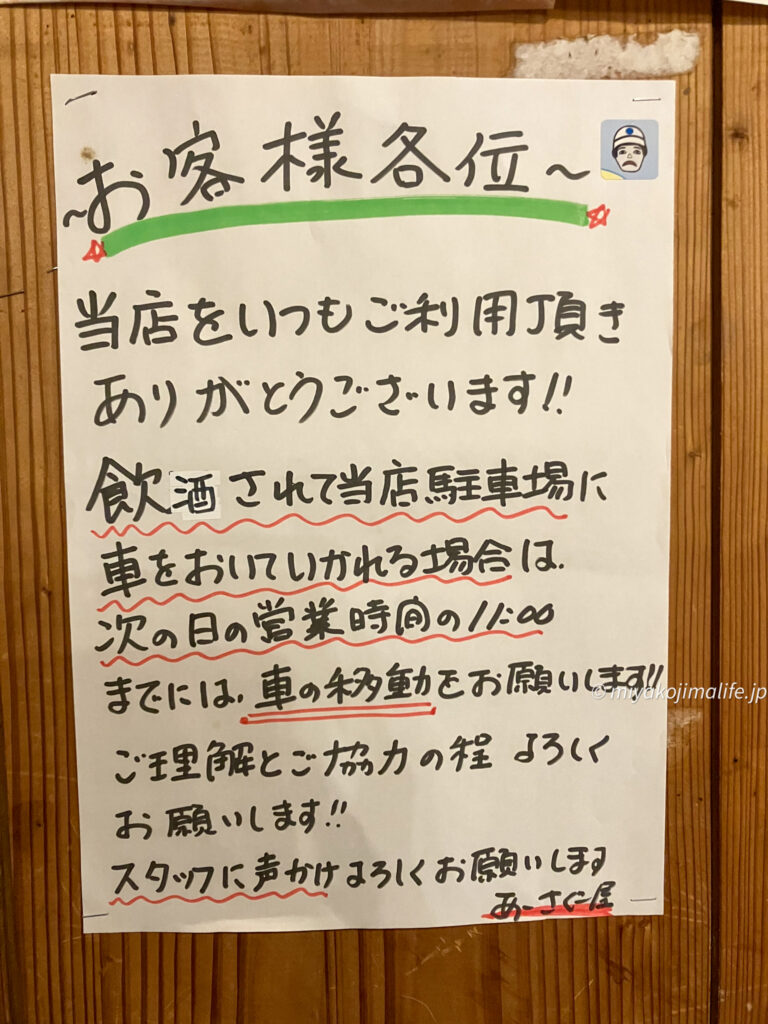
Another great feature is that after you’ve had a few drinks, you can leave your car in the parking lot and head home.
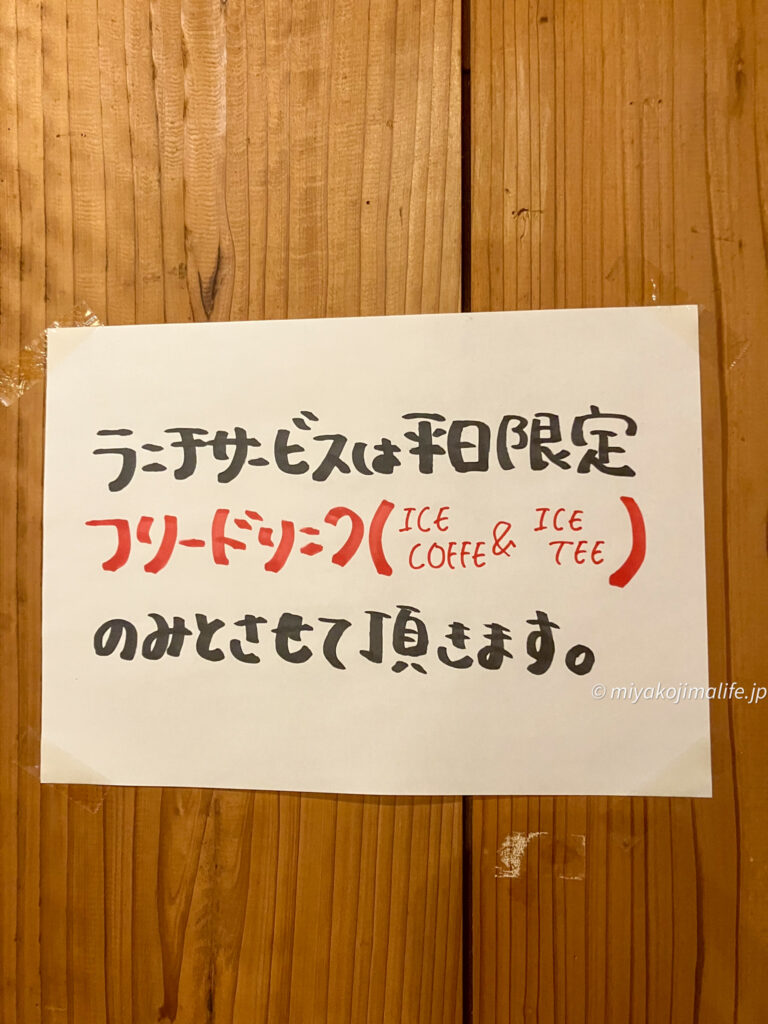
By the way, although this is only available on weekdays, lunch comes with free drinks. I’m happy to see that restaurants like this are occasionally found in Okinawa and Miyako.
It is definitely open on Saturdays and Sundays.
Finally, this might come as a surprise, but I think the fact that some places are open on weekends is a big plus for locals. Many restaurants on Miyakojima are closed on Sundays. Personally, I think it’s very “Miyako-like” that places are closed on the day they could make the most money.
Since I had lived on the mainland for a long time, there were some things I wasn’t used to when I first returned to Miyakojima—even though I’m a local. Now, though, I’m completely used to it—I just assume, “It’s Sunday, so the stores must be closed”…
Please be careful when visiting Miyakojima on Sundays!
Thanks so much for reading all the way to the end! (^人^)

コメントを残す