

Nmya~chi! Tuna (@miyakojimalife_) (*’▽’)
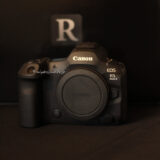
In this post, I’ll be writing about the new Canon RF 24-105mm F2.8 L IS USM Z lens, which I purchased in August 2025, and the RF 50mm F1.2 L USM prime lens.
In July, I purchased just the R5 Mark II body from Canon Online, and spent about a month without a lens. It was tough not being able to take any photos even though I had a new camera right there… Since I wanted to get a sense of the actual image quality and angle of view before buying, I went ahead and tried out some lenses while I was in Tokyo on a trip.
After trying out a bunch of different options, I finally bought the two lenses mentioned in the title‼︎ I was so happy! \( ˆoˆ )/
While sharing photos taken during my trip and on Miyakojima, I’ll explain why I chose these two lenses, how they perform, and how I use them in different situations. I’d be happy if you read to the end.
Reasons for Choosing the Canon RF 24-105mm F2.8 L IS USM Z
There are two types of camera lenses.
- Fixed-focus lens → It doesn’t have a zoom function, but the image quality is superb.
- Zoom lens → While it doesn’t produce the same image quality as a prime lens, it allows you to shoot at a variety of angles.
The RF 24-105mm lens I purchased this time is a zoom lens with a focal length range from 24mm to 105mm. The smaller the number, the wider the angle of view; the larger the number, the more telephoto the shot. It’s the same as the wide-angle, standard, and telephoto modes on an iPhone.
Among these zoom lenses, the collective term for the three—a “wide-angle zoom,” “standard zoom,” and “telephoto zoom”—each with a fixed F-number of 2.8 is known as the “Big Three Lenses.” This set consists of high-quality lenses and is highly coveted by many photography enthusiasts.
Traditionally, Canon’s “Big Three” zoom lenses—the “RF 15-35mm F2.8,” “RF 24-70mm F2.8,” and “RF 70-200mm F2.8”—have been the standard. Now, a new addition to this lineup is RF 24-105mm F2.8 L IS USM Z .

The Convenience of a Constant F2.8 Aperture
As mentioned earlier, the f-number indicates brightness; the lower the f-number, the brighter your photos will be, even in dimly lit areas. Of course, brighter lenses tend to be more expensive. It’s also important to note that with some lenses, the f-number increases as you zoom in. Lenses labeled with specifications such as f/4–6.3 have an f-number that increases as you zoom in, soThe photos are getting darker.
Every time I zoom in, the photo gets darker. Even though the initial settings produced photos with the brightness I expected, when the subject moves and I have to zoom in, the resulting photo ends up too dark, which makes it really hard to use.
The lens kit that came with my first Canon Kiss X4 was a variable-aperture lens. Since I couldn’t take the kind of photos I had envisioned,F2.8 constant aperture—brightness remains consistent even when zoomingThat was the part I absolutely wanted.
The ease of everyday use with a 24–105 mm focal range
The types of photos I usually take include snapshots of family and friends, school events such as sports days and cultural festivals, and landscape photos of Miyakojima Island and views from airplanes. In terms of focal length, I’d like to be able to cover a range from moderately wide-angle to medium telephoto.
I was torn between this and the Canon RF 24-70mm f/2.8 L, but when I actually tried it out in the store, I felt that at 70mm, I needed just a little more zoom. The size was just right, though…
In that regard, the 24-105mm lens I purchased this time offers excellent zoom performance even at the telephoto end. Additionally, it’s quite versatile, as it can be fitted with an optional power zoom and features smooth ring operation,Designed with video production in mindI felt that it had become like this. It’s really useful for things like filming videos at sports days.


Since I still have 25mm left, I can zoom in a little more. I wonder why I didn’t just shoot at 105mm… ( ー̀ωー́ ).。oஇ
The Strengths of AF and Image Stabilization as Experienced During Actual Shooting
According to Canon’s official information, the RF 24-105mm F2.8 L IS USM Z lens alone offers 5.5 stops of image stabilization per the CIPA standard, and when used with the R5 Mark II, it appears to provide up to 8 stops of image stabilization.
In fact, I didn’t have a single photo where I felt the camera had shaken during my usual shooting. This is just my personal opinion as an amateur, though. It performs exceptionally well even when photographing fast-moving subjects, such as at sports days. Because the f-stop is wide, I was able to increase the shutter speed and capture beautiful continuous shots.
The inner zoom mechanism is excellent.
The biggest advantage of this lens is its internal zoom mechanism, which prevents the telephoto barrel from extending or retracting when zooming. Since the center of gravity remains constant, you can handle the lens while maintaining good balance. Another major benefit is the reduced risk of rain or dust getting inside. When shooting outdoors, dust and sand can be a real concern, so this makes things a little easier.
The only drawback is the sense of scale.
The size and weight are this lens’s downsides. Since it weighs 1,330g, it’s quite a hassle to carry around while traveling. I feel like I could manage it for everyday use. That said, I end up bringing it along anyway—whether on family trips or trips with friends. After all, being able to take beautiful photos really gets me excited. I think it would be a hassle to carry around for parents raising babies—who always have a lot of gear—or children around 2 to 4 years old who need to be carried part of the way. That’s based on my own experience raising kids.
Lens Accessories
Here’s what the accessories that came with the lens looked like.
- Lens Case
- Lens cap
- Lens dust cap
- Lens hood (forgot to take a photo of it)
- Warranty Certificate

What really surprised me was the lens case! It had two zippers and was very sturdy. It was more like a handbag than just a case.

Since it’s a custom-fit case, it fits perfectly, and I find it very handy for carrying in my travel bag.
Price of the Canon RF 24-105mm F2.8 L IS USM Z
I’m interestedThe price of the lens is 495,000 yen.It’s expensive, isn’t it…? But it’s worth the price. After all, unlike the camera body itself, lenses last a long time. I bought it with the intention of using it for a long time, even as I upgrade my camera.

The Appeal of the Canon RF 50mm F1.2 L USM
Next, here are the reasons why I chose the Canon RF 50mm F1.2 L USM.
While the RF 24-105mm F2.8 L IS USM Z, which I’ve introduced so far, is a versatile lens that covers everything from wide-angle to medium telephoto and excels at video recording, the RF 50mm F1.2 L USM is“The ‘Image-Quality Monster’ of Prime Lenses”The appeal of this lens lies in its ability to make the subject stand out strikingly.

Overwhelmingly comical depictions and a sense of depth
The main reason I chose this lens was, after all, Depictions of senilityThe shallow depth of field unique to an f/1.2 aperture makes the subject stand out, creating a three-dimensional effect that looks just like a scene from a movie. When I paired the R5 Mark II with this lens, I personally felt the following four points very strongly.
- Vibrant colors
- The beauty of people’s skin
- The high moisture content in the photo
- Sensuality
I’m really glad I bought this lens—I’m completely satisfied with it.

Real-Life Experiences with Portraits and Snaps
The portrait photos are simply stunning. They capture people’s skin tones in a very bright and warm way. I’ve taken so many photos of my family and friends that it’s a shame I can’t post them all.
Instead, I’ll be posting photos from my trip to Tokyo.


Balance between sense of scale and descriptive power
The RF 50mm F1.2 L USM not only delivers high-quality images but also has a great size. With a maximum diameter of 89.8 and a length of 108 mm, it’s a size that’s easy to carry around while traveling. Although it weighs 950 g and feels quite substantial, I personally think this weight is acceptable given that it allows me to take full advantage of the benefits of a full-frame camera.
There are plenty of lightweight lenses available—as long as they aren’t L lenses—but that would defeat the purpose of buying a high-resolution camera. Please refer to the information below for lens details.

Compared to the Leica Summilux 50mm F1.4
Actually, before purchasing this lens, I had the opportunity to try out the Summilux 50mm F1.4 at Leica GINZA SIX. I had originally intended to buy the Summilux, but I decided against it because I felt that manual focusing without autofocus would be too difficult when photographing children.
Above all, when comparing photos, I felt that the image quality of the Canon RF 50mm F1.2 L USM was on par with the Summilux. While there are differences when you look at the finer details, the Canon lens was better suited for my purposes, so I went with it this time. Maybe someday my subjects will change, and I’ll end up trying out the Summilux.
Lens Accessories
Here’s what the lens accessories looked like.
- Lens Case
- Lens cap
- Lens dust cap
- Lens hood
- Warranty Certificate

I’m actually really happy that it comes with a lens case. It gives me peace of mind when carrying it in my bag.
Price of the RF 50mm F1.2 L USM
I’m interestedThe price of the lens is 357,500 yen.. This one’s expensive too, isn’t it…? But it’s for the same reason. Lenses last a long time, and above all, I really can’t do without this particular lens. Since buying cheap just ends up costing more in the long run, I’d rather buy a good one from the start than end up with a bunch of useless lenses.

[Summary] You can cover almost everything with just two lenses
The 24-105mm lens is really versatile, letting you shoot at a wide range of focal lengths, and it’s easy to use. Plus, it’s bright at f/2.8.
The 50mm prime lens produces incredibly beautiful images. Its f/1.2 aperture is also outstanding.
With these two, you can use them for different purposes as described below, so they’ll cover almost everything—from daily life to travel to hobbies.
- 50mm → Portrait. For when you want to take artistic-looking photos.
- 24–105 mm → Landscapes, sports events, portraits with background, and travel photography.
If you want to photograph birds here or take macro shots of flowers, you’ll need a different lens, but for capturing everyday moments and preserving memories, this lens is a sure bet. I debated whether to get the 35mm, but I ended up buying the 50mm, and I think using it alongside my 24-105mm is the best setup for me right now.
I hope this article brings some joy to someone.
Thanks for reading all the way to the end! (´・ω・)(´_ _)♪